


Simply5 UAM: Wi-Fi User Access Managed Across Sites
Sign-in and speed, data and time limits are enforced at each site's gateway and set centrally, so venues keep the access points and switches they already own.
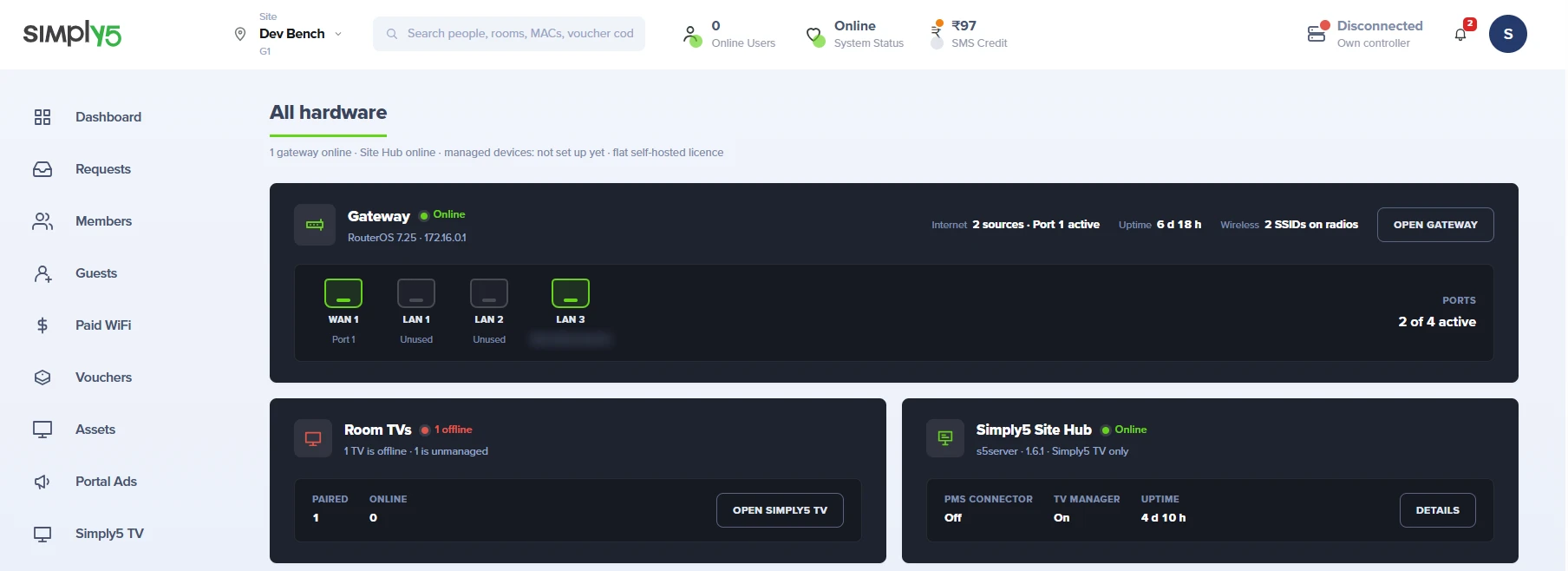
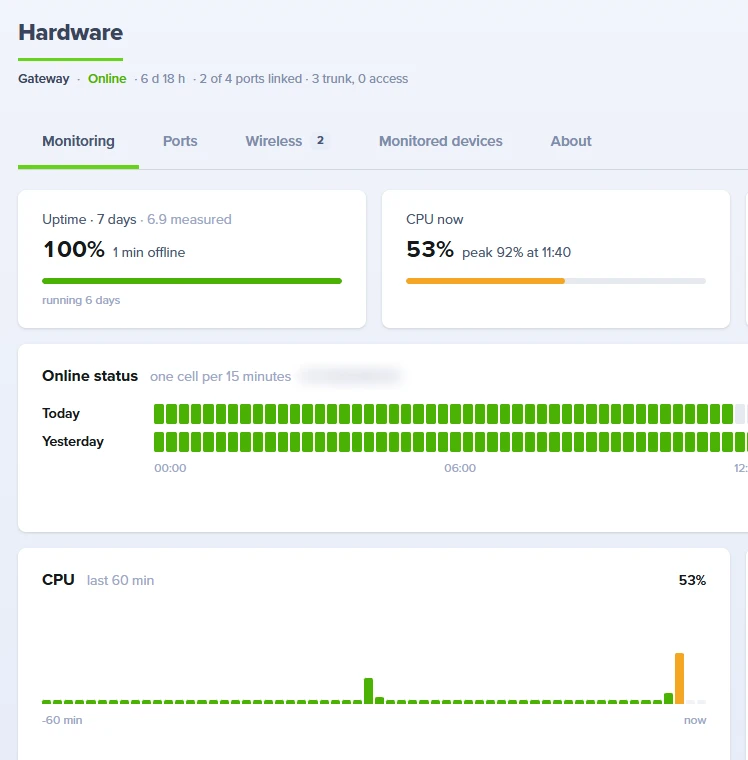
Policy Set Centrally, Enforced at Every Gateway
Operators running Wi-Fi across many venues tend to face two poor options: replace the access points to gain central control, or send a technician to configure every site. Simply5 UAM (formerly Simply5 Edge) avoids both. It sits between a site's internet line and its local network, so sign-in, limits and routing are applied at the gateway and the existing access points and switches stay in place. Each gateway takes its settings from Simply5 Central, the self-hosted console, and a new site is plugged in, named and configured remotely. KoderTroop builds the Simply5 software, which runs on third-party gateway hardware. The Simply5 platform runs at 500+ sites (simply5.io).
Capabilities in Detail
How Simply5 UAM works, one capability at a time.
Enforcement at the Site Gateway
Each gateway applies sign-in and speed, data and time limits, and fails over across internet lines, with mobile data held back as the last resort.
Discuss This CapabilityQuoted Per Deployment
Simply5 UAM is priced to the scope of each deployment: sites, devices, integrations and the support you need.
Quote for Simply5 UAM
Tell us how many sites and devices you operate and which systems it must connect to, and we will return a scoped quote.
Related Case Studies
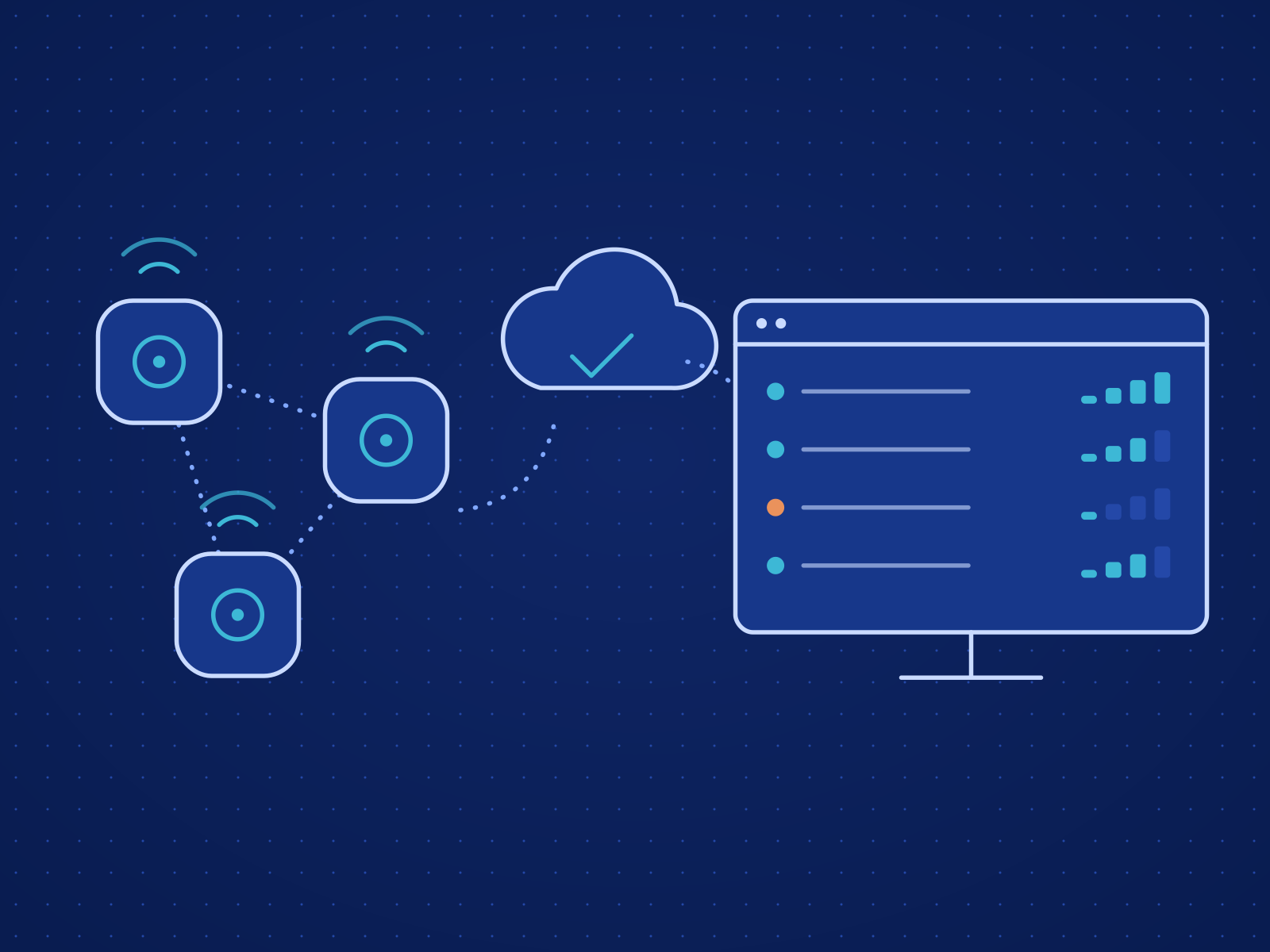
Simply5 Guest Wi-Fi & Network Access Platform
Guest and user access built by KoderTroop: a gateway at each site enforces sign-in and policy, and one self-hosted console runs every site.
Related Work
Insights
- Running Kubernetes at the Edge for Utility GridsAn architecture for running Kubernetes at the edge on low-power utility nodes, using k3s, local autonomy and periodic sync.
- Securing AMI Networks as Smart Meter Fleets GrowHow to secure AMI gateways and smart meters that attackers can physically reach, open and probe.
- Why Small Language Models Are Winning at the EdgeFor many production tasks, a fine-tuned small model matches a large one at lower latency and cost, and can run on the device itself. When to choose a small language model, and how to deploy one at the edge.